From Container to Venue
When the shipment arrives, the first task is a coordinated unpacking. Cartons are sorted by zone and by sculpture, so the installation team can work through the site in a planned order instead of searching for parts. A packing list with zone references makes this stage far faster.
Buyers should arrange for the containers to be delivered close to the installation area, or at least to a space where pieces can be staged before moving to their positions.

Site Preparation Before the Team Arrives
The venue must be ready before installation begins: ground conditions confirmed, access routes open for lifting equipment, and any permits or site rules agreed in advance. Anchoring requirements depend on the ground type, so the venue survey shared during the planning stage is what allows the team to prepare the right fixing method.

Assembly Sequence for Large Structures
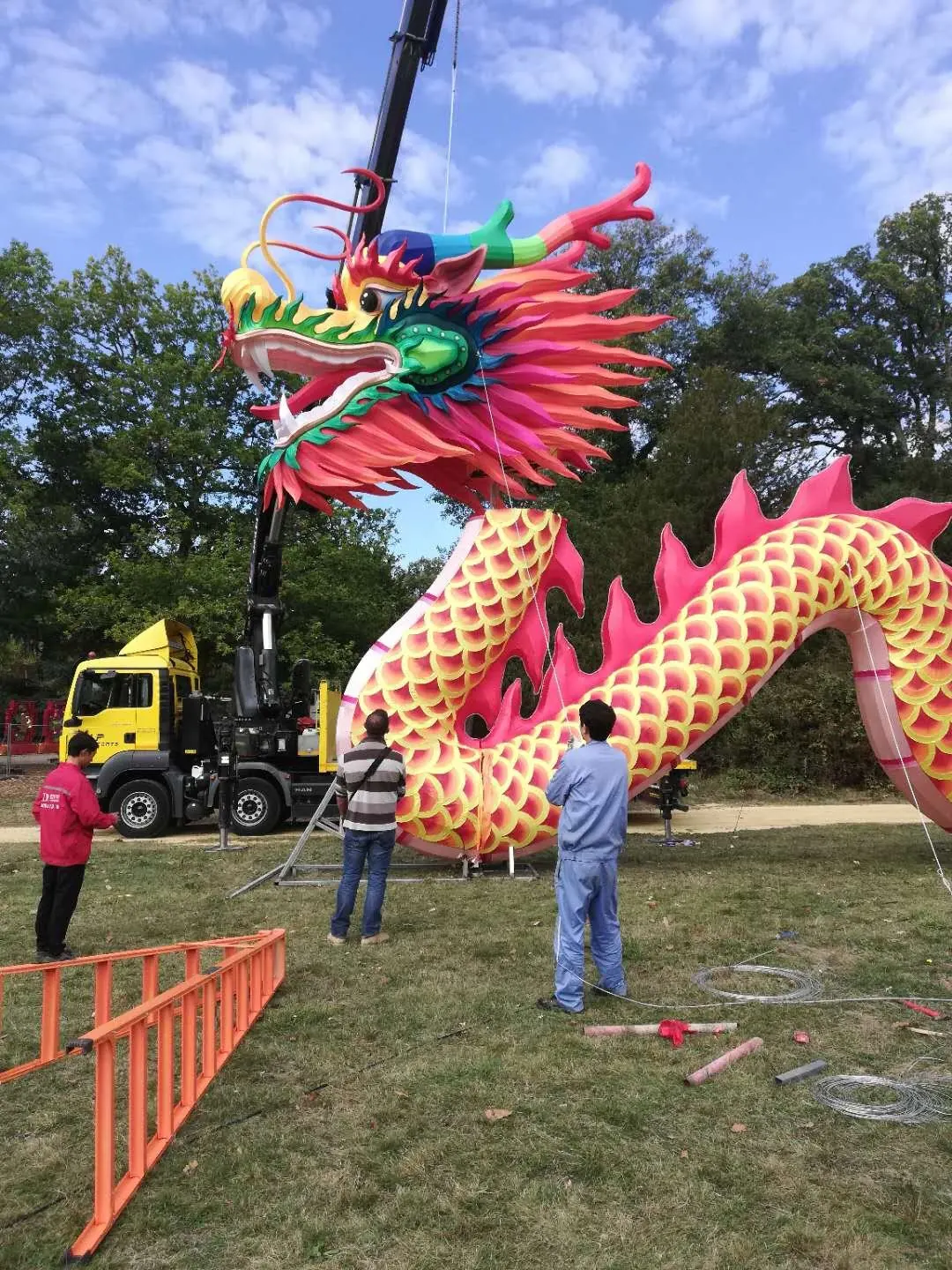
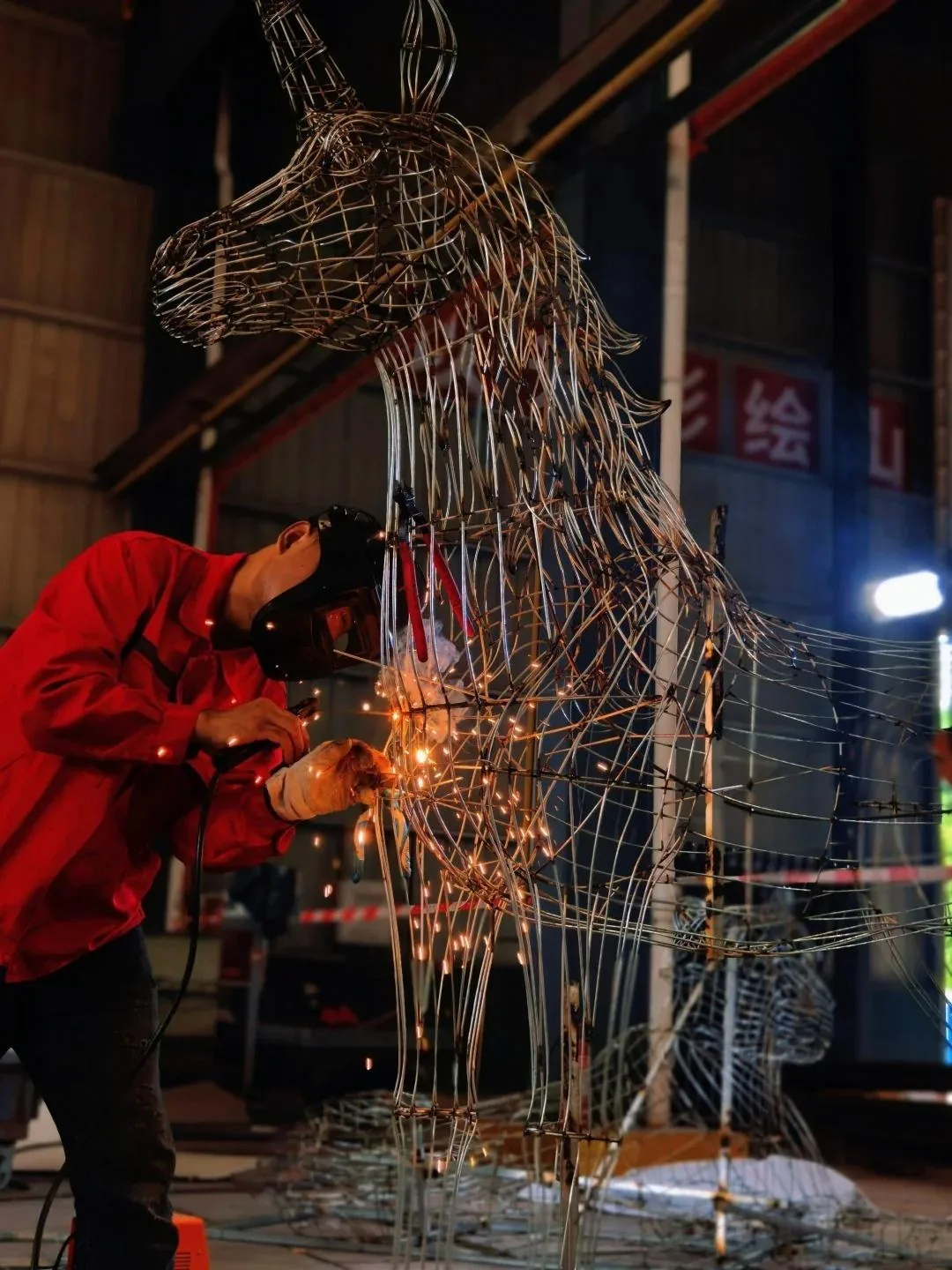
Large lantern sculptures arrive in sections. The team assembles frames, connects the sections, fits the fabric, wires the lighting and tests each structure before it is moved to its final position. Entrance features and landmark pieces are usually installed early, with route lighting and smaller lanterns filled in around them.
Electrical Connection and Testing
Each installation zone has a planned electrical layout: distribution boards, cabling routes and connection points. The team completes the connections and runs a full testing pass before the venue opens. Any existing site power arrangements should be confirmed with the venue team in advance so the layout can be designed to match.
Safety Checks and Documentation
Before opening night, the installation is inspected: anchoring, structure stability, electrical testing and clearances along visitor routes. The venue receives documentation of the installation so their own teams and insurers can review what was installed and how.
Who Provides the Installation Team
Installation support can be arranged as part of the project, with an experienced team travelling to the venue, or delivered as remote guidance for a local crew. The right model depends on the project scale, the site complexity and the capability of the venue's own team. This is confirmed during the project discussion, not improvised after arrival.
Dismantling and Storage Considerations
Many festivals run for a season and are then dismantled. If the installation will return in a later year, dismantling is planned with the same care as assembly: sections are labelled, protected and packed for storage. Ask about the storage and reinstallation plan when discussing your project, so the first season is designed with future seasons in mind.
The Delivery and Handover Process
When the shipment arrives, the buyer or venue team coordinates delivery to the site and confirms the packing list against the shipment. Clear labelling by zone and piece is what makes unpacking efficient, so the installation team can work through the site in order.
Confirm who handles the delivery-to-site leg in the proposal. Delivery terms such as DDP include this; ex-works terms leave it to the buyer.

Working With the Local Crew
For many overseas projects, installation happens with a mix of supplier engineers and local labour. The supplier's team leads the technical work, while the local crew handles lifting, access and site logistics under direction. A clear site plan and installation sequence make this collaboration smooth.
Agree in advance how many supplier engineers travel, what equipment the venue provides, and how communication is managed on site.
Common Site Challenges and How They Are Solved
Ground conditions, access width, power points and weather windows are the usual challenges. Each is handled by planning: the venue survey identifies ground and access before the team arrives, the electrical layout is confirmed against existing site power, and the installation window is protected in the event calendar.
After the Opening: Operation and Maintenance
The installation team's work ends at opening night, but the event runs for a season. The venue receives documentation on operation, maintenance access and what to monitor during the season. Spare parts and support arrangements can be confirmed in the project discussion, so the event is supported beyond day one.
Power Supply and Distribution Planning
The electrical plan depends on what the venue can supply: existing power points, available capacity and distribution routes. The venue survey captures these details, and the design team plans the cabling and distribution boards to match the site.
Buyers should confirm power availability early, because upgrading site power or running long cable routes affects both the installation schedule and the project cost.
Communication and Documentation Across Borders
Overseas projects work across time zones and languages, so communication is planned: who coordinates on each side, how progress is reported and how decisions are confirmed. Documentation in clear, standard formats keeps both sides aligned through production, shipping and installation.
What the Buyer Coordinates Versus What the Supplier Handles
A clear split of responsibilities prevents friction on site. The supplier typically handles design, engineering, production, packing, freight coordination and the technical installation. The buyer coordinates the venue: access, permits, ground conditions, site rules and any local lifting or labour arrangements.
This split is agreed in the project discussion and written into the proposal, so both sides know what to prepare. Ambiguity here is the most common source of installation delays.
Contingency Planning for the Site
Weather windows, access delays and customs timing can all move the installation schedule. A professional plan includes contingency: buffer days in the installation window and a clear process for communicating schedule changes to the venue team.
Buyers should ask what happens if the shipment is delayed or the site is not ready on arrival. The answer shows whether the supplier has managed international installations before.
What the Buyer Should Ask Before Signing
Before committing, buyers should confirm the installation model in writing: who travels, who provides equipment, what the venue prepares and how schedule changes are handled. These answers belong in the proposal, not in a later email.
The installation plan is part of the project scope. If it is missing from the quotation, ask for it before deciding between suppliers.